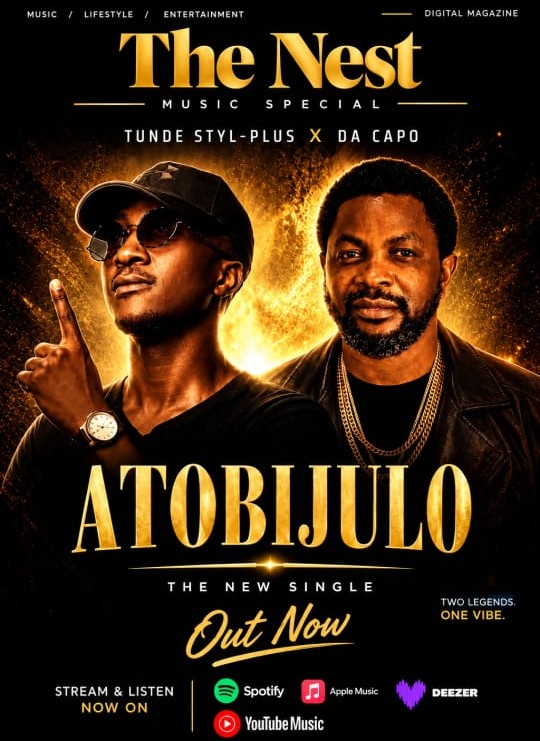

The Story Behind "Atobijulo"
"Atobijulo"
Music . Memory . Collaboration
'Atobijulo!!!' The Next Chapter
Since my days with Styl-Plus, and particularly from around 2012 when I began releasing music more consistently as a solo artist, I have gone through different stages and phases of my musical journey. I started out simply as Tunde, then became Tunde T. Dot, and eventually returned to Tunde Styl-Plus because I wanted to preserve and carry forward the legacy I built with the group. Over the years, I have released quite a number of songs, experimented with different sounds and identities, and continued to evolve as an artist. But “Atobijulo” is particularly special to me because, in many ways, it connects where I am today with where I came from. The story actually goes back to the late 1990s.
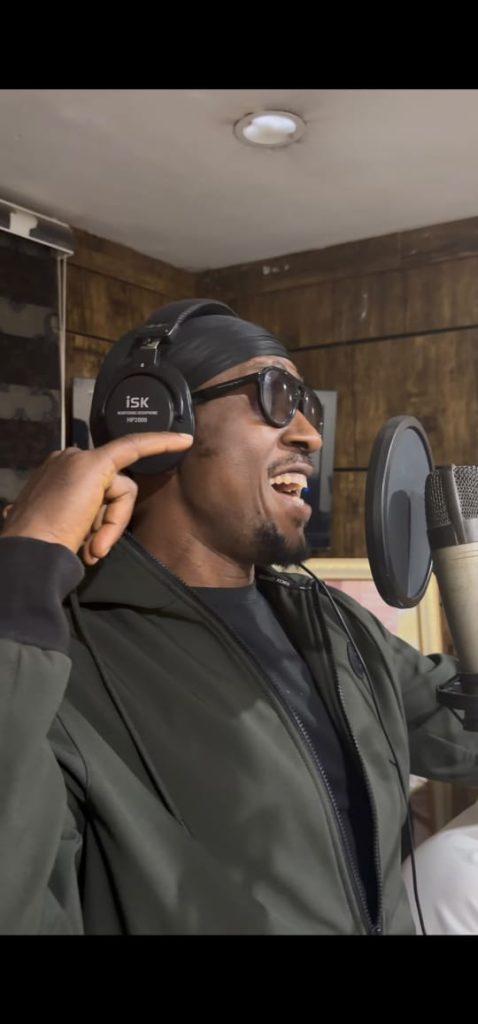

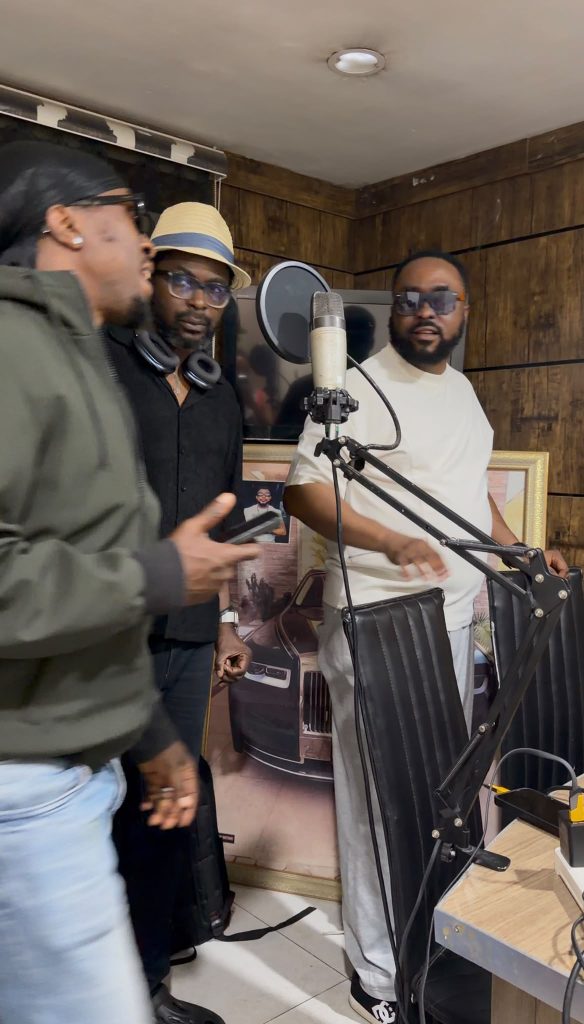
Da Capo, who many people will remember for his work on the famous “Olufunmi” remix with Styl-Plus in the 2000s, was involved with us much earlier than that. In 1997, before Styl-Plus became widely known, he produced one of the demos we recorded. There was a hook on that demo that I wrote at the time, built around the Yoruba phrase, “Iwọ là tó bí jú lọ.”
That phrase stayed somewhere in my memory.
"That phrase stayed somewhere in my memory."
Tunde, Styl-Plus.
I also had a beat I had produced around that period which I had always felt could become something significant. I had originally imagined giving it to the group at some point, but that never happened. Fast-forward to 2026. I wanted to create a song that would glorify God, and somehow those two pieces of my musical history came back to me—the old hook and the old musical idea. I thought, why don’t I bring these elements back and give them a new life?. So, I took the essence of that old hook and some of the melodic elements from the beat and reconstructed the idea from the ground up, this time through the influence of the Afrobeats sounds I had been listening to in recent times.
As I was creating the song, I kept thinking about Da Capo. He had moved to the United States and gone into the technology space, so he hadn’t really been active on the music scene for quite some time. But I remembered what he brought musically back then, particularly his style of rap. I felt that the kind of rap he was known for was exactly what the song needed. So, I produced the beat, recorded a rough version of the hook and sent it to him.
"I’m not featuring you on this record. Let’s do this together.”
"Tunde"
I told him that if there was anything he wanted to do to the production to enhance it, he should feel free. But more importantly, I wasn’t approaching him as an artist I wanted to feature. I wanted us to collaborate. I told him, essentially, “I’m not featuring you on this record. Let’s do this together.” Da Capo came on board. He made some subtle additions to the drums and, of course, delivered his rap. When I received his recording, I immediately felt the energy he had brought to the song. It changed the dynamic of the record.
I knew then that I had to respond to that energy. I scrapped the original verse I had recorded and wrote and recorded a completely new one that would sit better with what Da Capo had brought to the track. At that point, the song really began to take its final shape. The recording process itself was quite international. Da Capo recorded his parts in Maryland in the United States. I recorded my parts partly in Brentwood in the UK, where I had started working on the song, and later completed the work in Nigeria.After spending so much time working on the record, I knew I needed fresh ears. When you have listened to your own production for too long, you can become so familiar with every frequency and every detail that you stop hearing the record objectively.
That was where Mekoyo came in.
Mekoyo is a prolific engineer, and I felt he was the right person to give the record that final perspective. Da Capo and I eventually rendezvoused in Abuja at Mekoyo’s studio, where we went through the record together. We made some final tweaks, polished different elements and worked on the finishing touches. And then, finally, we had “Atobijulo.”
For me, the beauty of the song is not just in the finished recording. It is in the journey behind it that something that began with an idea and a hook from the late 1990s could find new life almost three decades later. It also represents a genuine musical synergy between three people bringing different strengths to the same record.
The Next Chapter
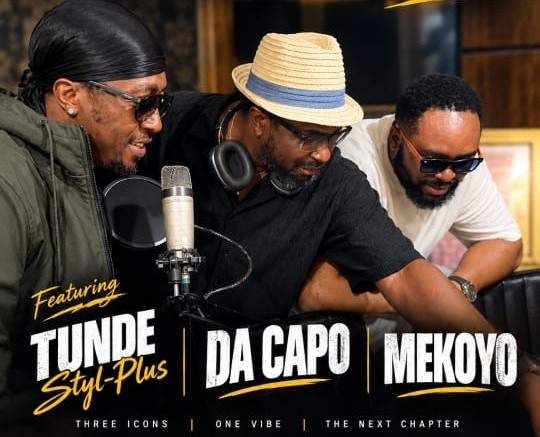
Listen to "Atobijulo"
“Atobijulo” was written and composed by Tunde Styl-Plus and Da Capo, produced by Tunde Styl-Plus, co-produced by Da Capo, and mixed and mastered by Mekoyo.
It is a collaboration in the truest sense of the word.
Tunde (Styl-Plus)
. Singer . Songwriter